
Why KindyROO kids excel socially and in leadership roles
As well as laying down the foundations for academic, emotional and sporting success, the KindyROO program also sets children up for excellence in social and emotional skills. KindyROO graduates are generally socially adept and emotionally mature, which makes them great team players, great leaders and great classmates, and many are now leaders in schools and communities.
To do well at school socially and emotionally, and to become future leaders, children need to be able to achieve the following skills from their earliest days in the school classroom:
Social skills:
- Be able to trust and relate to other adults.
- Be able to take directions from other adults.
- Be able to go to preschool without too many tears.
- Be able to mix happily with other children at preschool.
- Be able to take turns and share.
- Have begun to have friends over to play.
- Have special friends and can talk about them in conversation.
Emotional skills:
- Be able to separate from parent easily.
- Have confidence in own abilities.
- Be able to participate in activities by self.
- Be able to participate in group activities.
- Be able to exercise some self-control.
- Be able to take responsibilities for getting started, packing up.
- Be aware of other children’s needs.
- Be able to concentrate for short periods up to ten minutes.
How the KindyROO program encourages the development of the above skill set
At KindyROO children are given the opportunity to develop these skills throughout the entire program of activities. While our key focus is on movement – as it is through movement that we create and build key neural pathways essential to learning – our movement activities are intertwined closely with opportunities that also stimulate emotional and social learning.
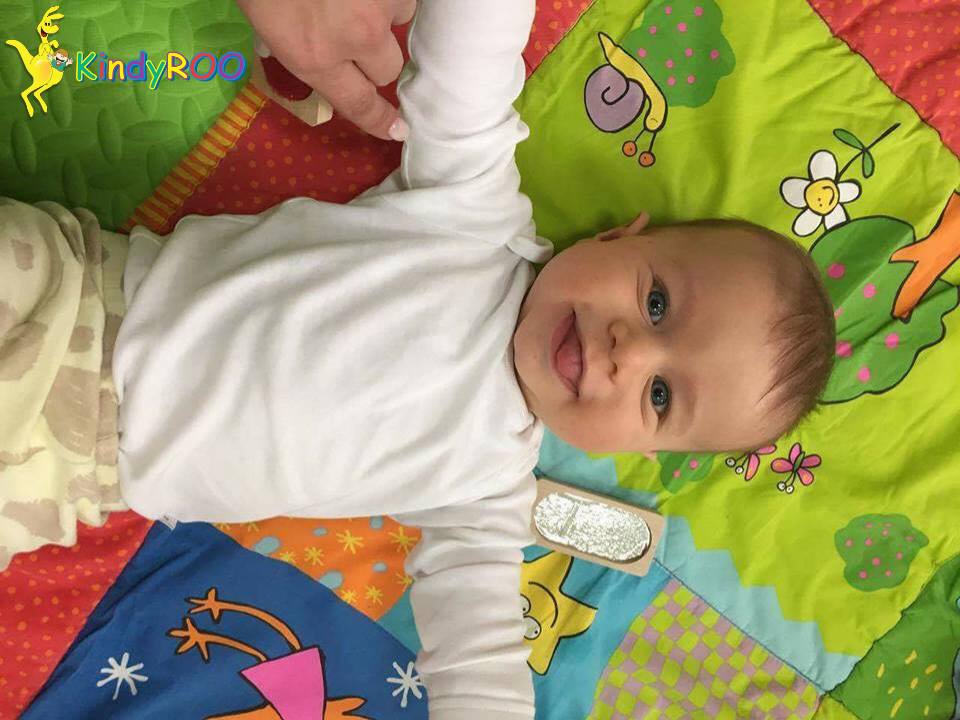
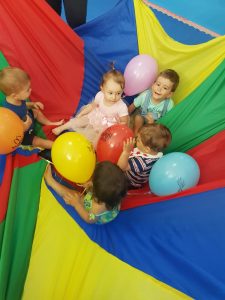
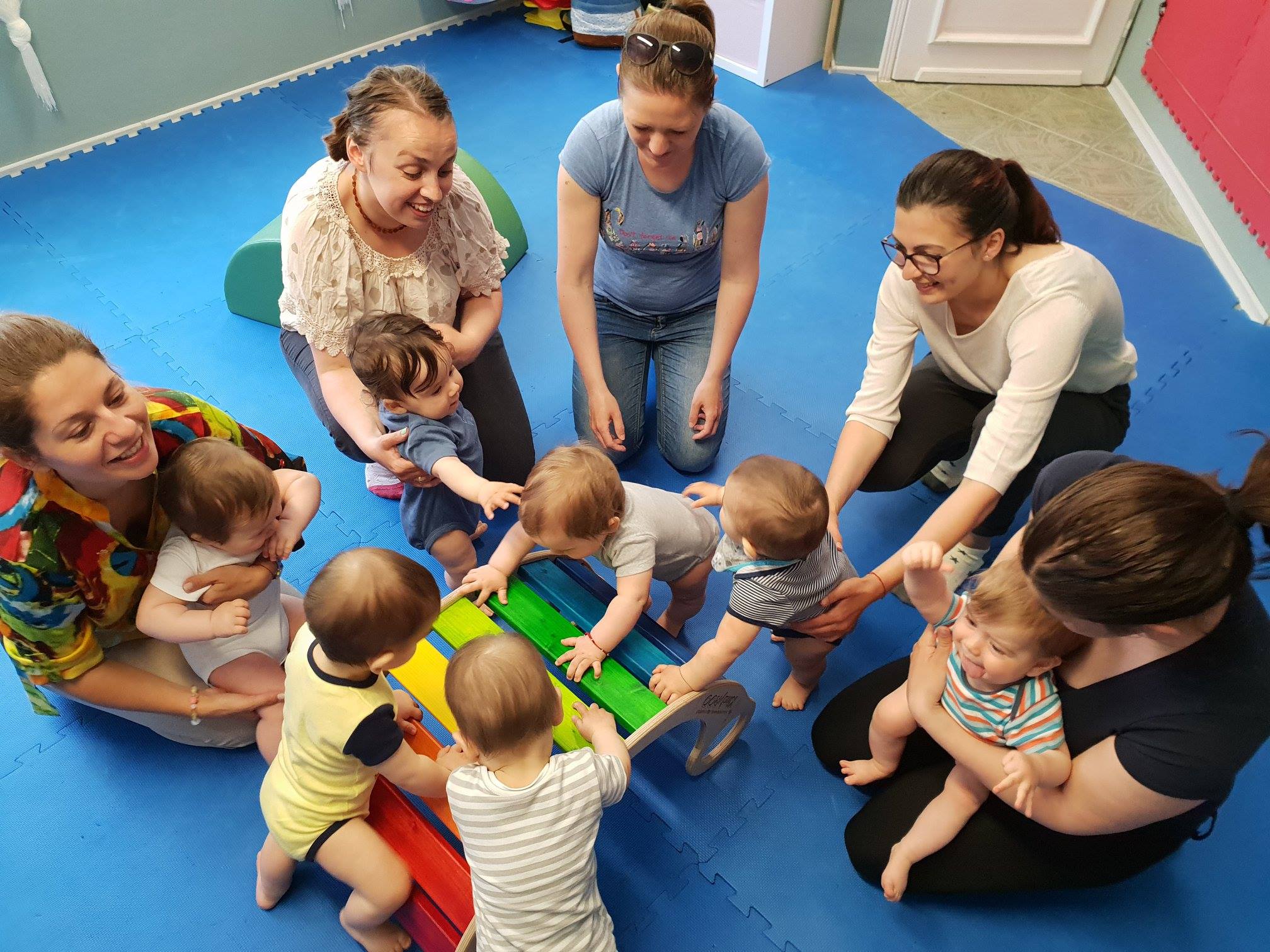
Even from as young as mobile babies, children in a KindyROO class learn to take turns, cooperate with others, share equipment, work out how to navigate around others when moving, and learn to make eye contact with other children and adults other than immediate family. Babies and toddlers learn to follow instructions on request from someone other than their parents; they build trust in someone other than their parents as they use the KindyROO equipment assisted by their KindyROO teacher; they participate in group activities as they play with small equipment, learning to share and building awareness of the needs of others.
Taking turns while waiting to climb up a ladder, roll along a mat or be handed a piece of equipment helps young children learn to exercise self-control. Self-control is a key ‘school ready’ skill. Long-term research has shown that young children who have excellent emotional regulation in the form of self-control at four years of age learn more successfully at school and are less likely to be overweight.
Concentration is also a key ‘school-ready’ skill. Children who can concentrate for periods of ten minutes at a time when they start school are far more likely to be successful learners. They can follow a sequence of instructions, remember them and act on them correctly. Imagine if you arrived at school and a short concentration span enabled you only to remember the first instruction from the teacher, “sit down”, and not the remainder – “get out your blue work book and pencil and open to page 10.” Learning is enormously difficult as the child struggles to work out exactly what she or he needs to do. At KindyROO we deliberately include auditory sequencing training in class. For our one year olds, we ask them to follow a sequence of one or two instructions, for our two year olds, a sequence of two or three, and by the time a child is five years of age and ready for school, they should be able to follow a sequence of five to six instructions.
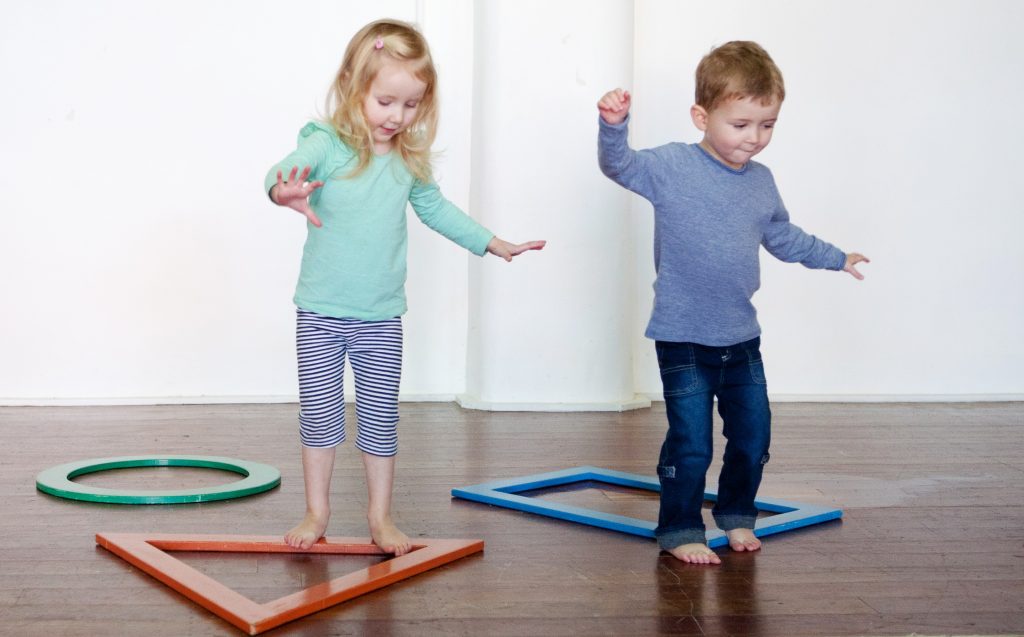
Incorporating movement into a sequence of instructions helps the brain develop the necessary pathways that enable a child to build on the sequence as it is learned. For example, one year olds: “Can you step into the hoop?” Two year olds: “Can you jump forward into the hoop and step out backward?” Three year olds: “Can you hop forward into the hoop, step sideways out of the hoop and then jump around the hoop? Four-five year olds: “Can you jump in the first hoop, hop into the second hoop, turn around and jump into the third hoop then do a somersault through the fourth hoop?”
Importantly, successful learners are much more likely to be happy, confident and to enjoy school, and this assists in both social and emotional maturity as it keeps stress levels to a minimum. Children who are stressed at school find controlling their emotions much harder because the stress hormone- cortisol – floods their brain and keeps them in a ‘flight or fright’ high alert state of mind. The anxiety that arises as a result of high stress distracts the mind from concentrating on the task at hand, so learning is compromised. Anxiety affects the maturation of the emotional areas of the brain and this impacts on the ability to socialise easily and to cope with the everyday challenges of school.
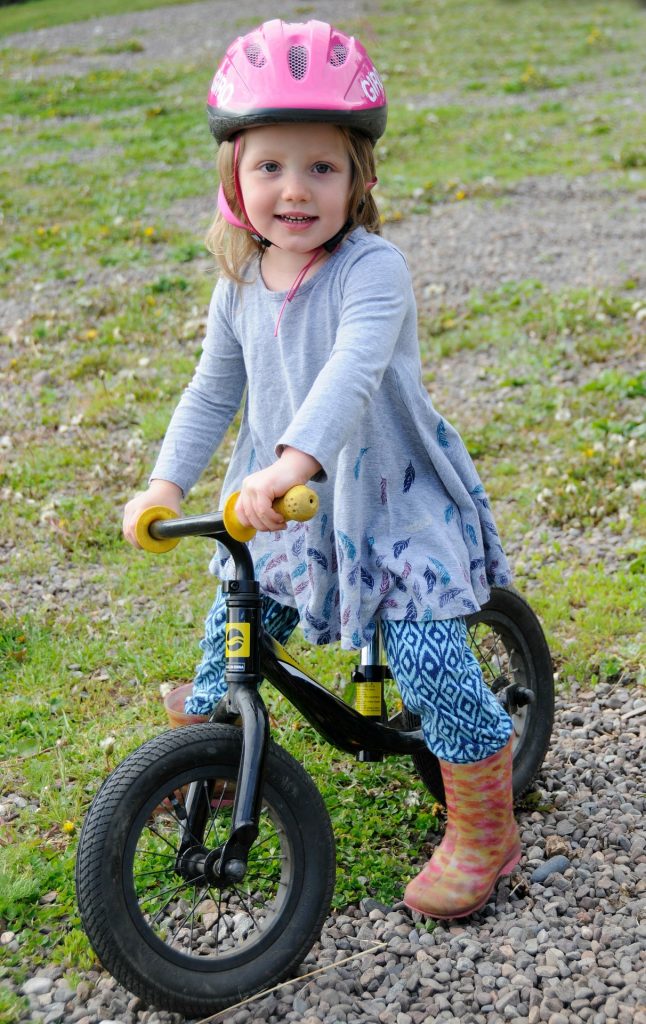
At KindyROO we provide lots of movement activities that help the brain to release the ‘feel good’ hormones – endorphins – that help children think clearly, concentrate, develop good self-esteem, confidence and emotional regulation skills that come with the success of learning new tasks and skills at each and every age and stage of development. Importantly KindyROO activities all occur in an environment where babies and small children feel safe as they are with their important family member or caregiver. Feeling ‘safe’ means the brain is stimulated by these feel good hormones to learn new tasks and to tackle new challenges without fear of failure or rejection. Continuing these activities at home on a daily basis is also an important part of the healthy development of social and emotional skills.
As a little example of developing leadership abilities we were delighted to hear that out of twenty-five babies who enrolled in the Maitland KindyROO centre in 2005, fourteen continued in the program until going to school. Of these fourteen, SEVEN became Primary School Captains in 2016.
KindyROO is about more than having a good time. It’s designed to ensure children have the very best possible beginning as they launch into their life at school and beyond, not just academically and physically, but also socially and emotionally.
Dr Jane Williams (PhD, BMgt, RN(Paeds)) is the Research and Education General Manager for KindyROO. She is one of Australia’s leading experts on baby and child development.

Why KindyROO kids excel at writing, reading and arithmetic
The KindyROO program is designed to ensure that babies and children go through the normal developmental sequence of movements and are given plenty of opportunity to practice, repeat and refine these movements within each stage of development. It is only through repeated movement experiences that the young brain grows and connects efficient and effective message pathways that optimise brain development and provide the foundations for more complex levels of learning such as reading, writing and mathematics.
Writing
The human body is genetically programmed to develop from the centre of the body – big muscles – to the outer parts of the body, dominated by the small muscles. Proficiency at any fine motor (small muscle) task, depends firstly on the development of the associated bigger muscles, (gross motor). Handwriting is one such fine motor skill. Learning to write actually begins in infancy. If the big muscles do not receive adequate stimulation and development, then there is a flow on effect to the small muscles in the hands and so writing, or any task requiring manual dexterity, can be affected.
Through tummy time, commando crawling and creeping our babies begin their journey towards being proficient hand-writers as they gain control over primitive reflexes, develop muscle tone and strength in the hands, arms, shoulders, neck and back – vital for later fine motor skill development.
As they grow, young children continue to develop their upper body strength as they push, pull, lift, carry, climb, hang and swing – working on both the gross motor component of handwriting and fine tuning manual dexterity skills. Holding, hanging and swinging correctly helps with the development of cortical grip which will help to ensure that the correct mature pencil grip will develop over time. This is one of the reasons you will find so many hanging and swinging opportunities throughout our KindyROO classes.
Becoming competent on the KindyROO overhead ladder (monkey bars) not only works on gross motor abilities and strengthening but also developing hand-eye coordination (the eyes will follow the hands when moving from rung to rung), motor planning (moving and thinking), timing, rhythm, posture, balance and laterality development.
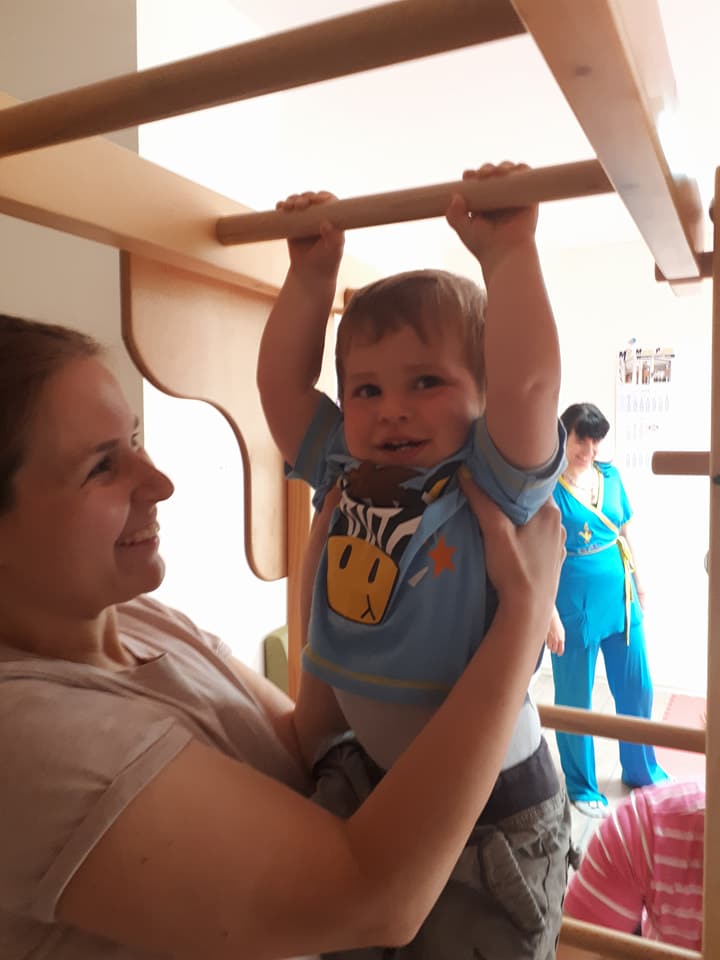
While muscle development and upper body strengthening are vital components necessary for proficient handwriting, there are other areas of skill development that are also needed by our young hand-writers.
To be ready to write easily children need to have the following:
- Good tactile and body awareness so they can control their fingers automatically.
- Posture and balance developed to the extent that they can sit still easily and concentrate on their work.
- Auditory perception and processing skills so they understand the instructions given by their teacher.
- The ability to move their eyes smoothly from what they are copying to what they are writing.
- The ability to ‘picture’ the letters they are writing in their mind (visualisation).
- The fine motor skills to manipulate the paper and pencil.
- The hand-eye coordination to write correctly what their eyes have seen.
- Temporal awareness; an internal understanding of time, to be able to do the allotted task in the time allocated.
When all of this is in place, our children can easily take on the task of writing. However, if one or more of these factors are not fully developed, then a child may potentially struggle with the writing tasks at school.
Reading
The first steps towards reading begin long before a child enters school.
When children have the opportunity to encourage motor skill development they also stimulate the muscles of their eyes and their vision. As they move from one place to the next, their eyes learn to adjust – near and far, up and down, from left to right and back again. The brain is also learning to interpret what is being seen. These are essential skills for learning to read – eyes need to move smoothly and in unison across a page to read, and the brain needs to be able to interpret what is being read. This ability to ‘visualise’ (see in our minds eye) and perceive (understand what we are seeing) are key ingredients to learning. Children with limited movement opportunities often find these tasks much harder.
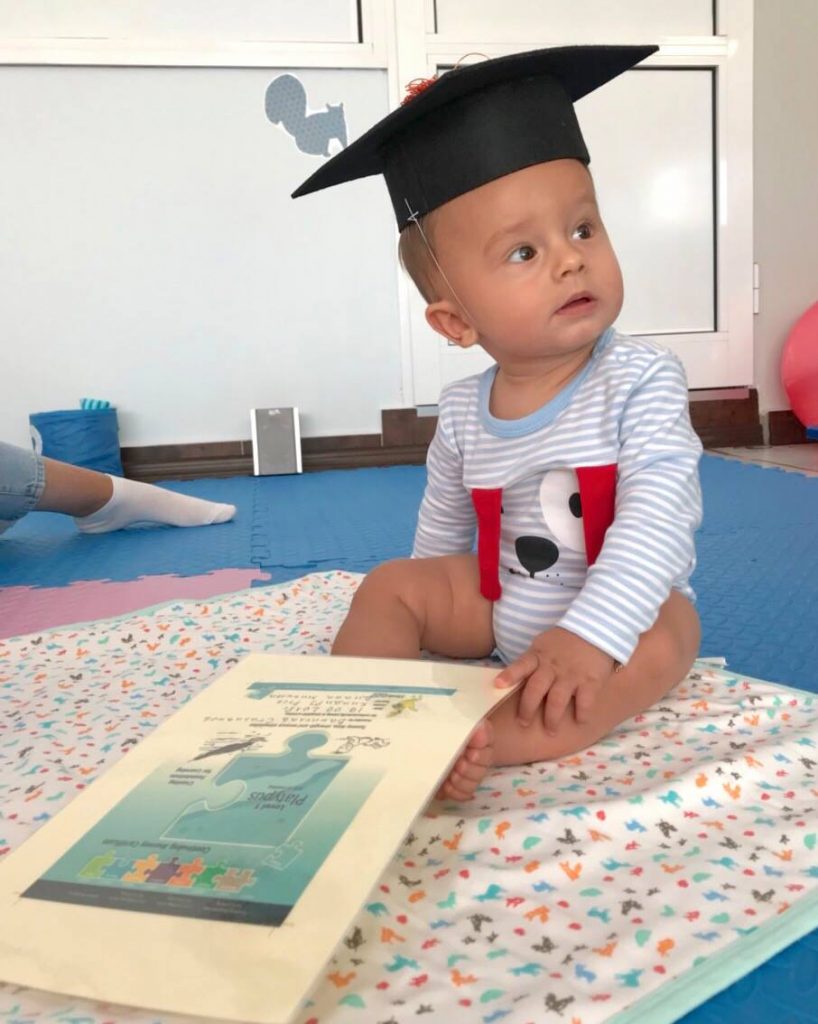
Musical songs, games and nursery rhymes like those used at KindyROO promote and boost language development, helping to lay the foundation for communication and learning to read and spell. Neuroscientists have found that hearing, repeating, and moving rhythmically to music, teaches the brain how to communicate. It connects the necessary neural pathways the children need in order to begin to speak and is encouraging for verbal communication. Good readers have good language and speech skills.
Mathematics
Babies and young children develop mathematical skills based on bodily and sensory-motor experiences that apply to mathematical concepts such as shape, space and order e.g. How do I fit? How many of those shapes can I crawl through? What part of my body should I use first in order to move through that tunnel? All experiences they get plenty of practice at during KindyROO classes! A recently published study has found that toddlers under the age of four years who acquire an extensive range of motor skills also demonstrate high levels of mathematical skills.
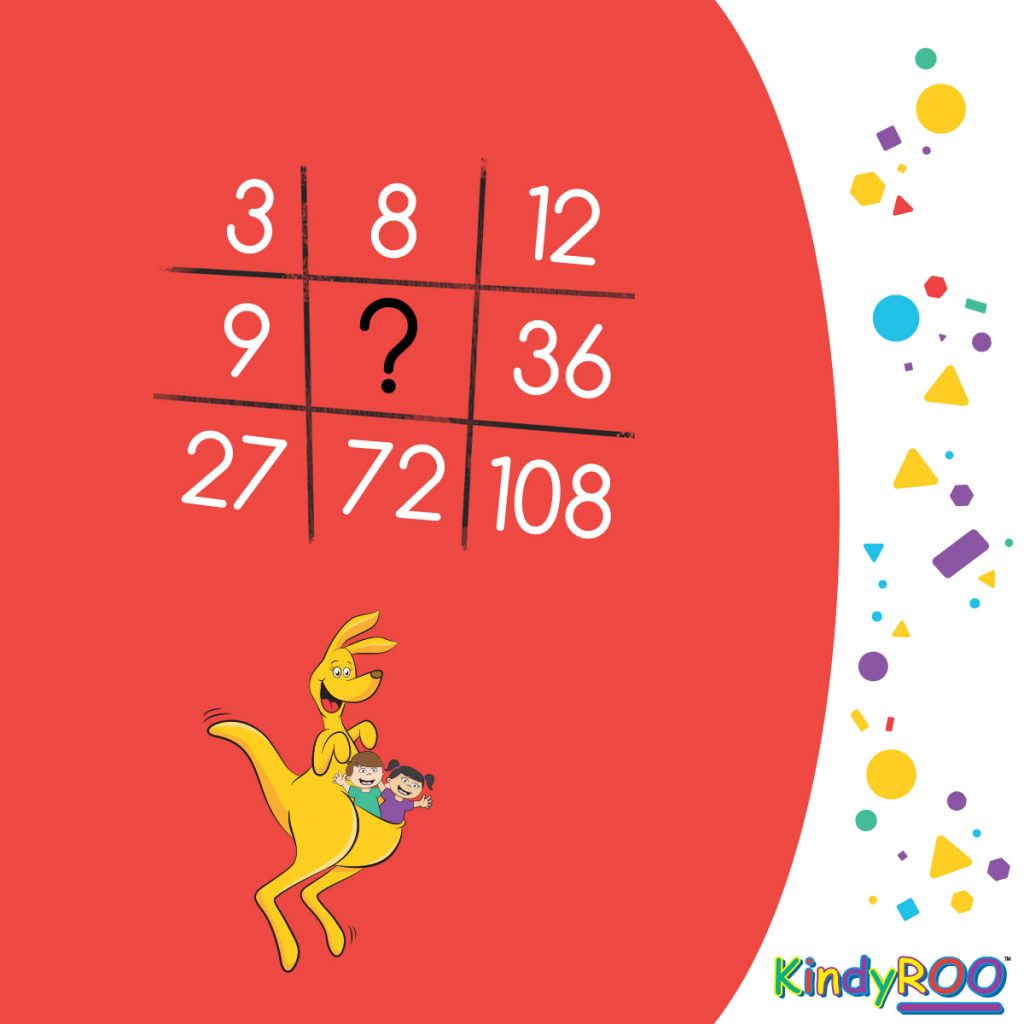
When toddlers actively play they are stimulating the development of number skills such as manipulation, playing with objects that require classification, one-to-one correspondence, counting and sorting.
Mathematics is also based in an understanding of rhythm and time and having a well-developed sense of temporal awareness. Rhythm is essentially a basic form of mathematics. A young child learns patterns associated with rhythm. These rhythmical patterns then assist the child with later mathematical pattern recognition. The combination of music and movement also enhances skills of logic and rhythmic skills that are important for organising ideas and solving problems – the same skills needed to develop an understanding of mathematics. At KindyROO you will have noticed just how many activities we do that involve the use of a regular beat; finger and foot plays, exercises to music, dances, music time on the mat with rhythm sticks, maracas, triangles and even parachute time.
How to raise a smarter, happier baby
There are thousands of parents already raising smarter, happier babies and it is costing them nothing other than their time.
The supporting documentation is now vast and undeniable – a baby’s brain grows most rapidly in the first twelve months of life and this is a critical period for learning. What happens in the first year of life affects all later development. The correct stimulation for babies can influence how well they behave, read and learn when they reach school. In addition, they have improved confidence, coordination, communication and socialization skills.
Parents can have a dramatic influence over their babies’ brain growth and their future learning ability. We believe that every parent has the right to give their child the chance to be the best that s/he can be and the right to easily access information so they can make this happen.
This is why our Active Babies Smart Kids twelve-part, online video series for parents of babies is entirely FREE. Our series is highly recommended by doctors, paediatricians, early childhood experts and the Maternal Child and Family Health Nurses Association. This series is taking the parenting world by storm! The most wonderful part about it all is just how many babies will be getting off to such a great start. The future for these babies is looking very bright.
You can join the thousands of parents already raising happier, smarter babies and play with your little one in the best way for brain and body development, helping to lay those crucial foundations for future learning, simply by subscribing here . The earlier in your parenting career that you watch the videos, the better! Our series is designed for you to be able to do with your little one from birth.
Post continues after video.
“I’ve been following the Active Babies Smart Kids videos, doing one every few days. I’ve noticed a huge difference in bubs abilities, especially tummy time. They are such a great reference tool because not only are you provided with the activity but also the ‘why’ which is so important! It’s not only teaching bub, it’s teaching me too! I feel more confident as a new mum. Thank you for this great resource.” Read more testimonials here.
The series is full of information, specialist advice and hundreds of loving activities for parents to join in and to do with their babies to ensure they receive the best start and the correct stimulation to lay down the foundations for later learning. You’ll enjoy fun activities, dance and sing as you learn about tummy time, baby exercises and massage, speech and hearing development, baby balance and coordination, bonding and so much more.
More and more evidence is being documented confirming the long-term benefits of our program. School teachers are describing those who have been through the KindyROO program as having higher levels of concentration, better behaviour and being generally happier, more socially mature and physically capable than their peers.
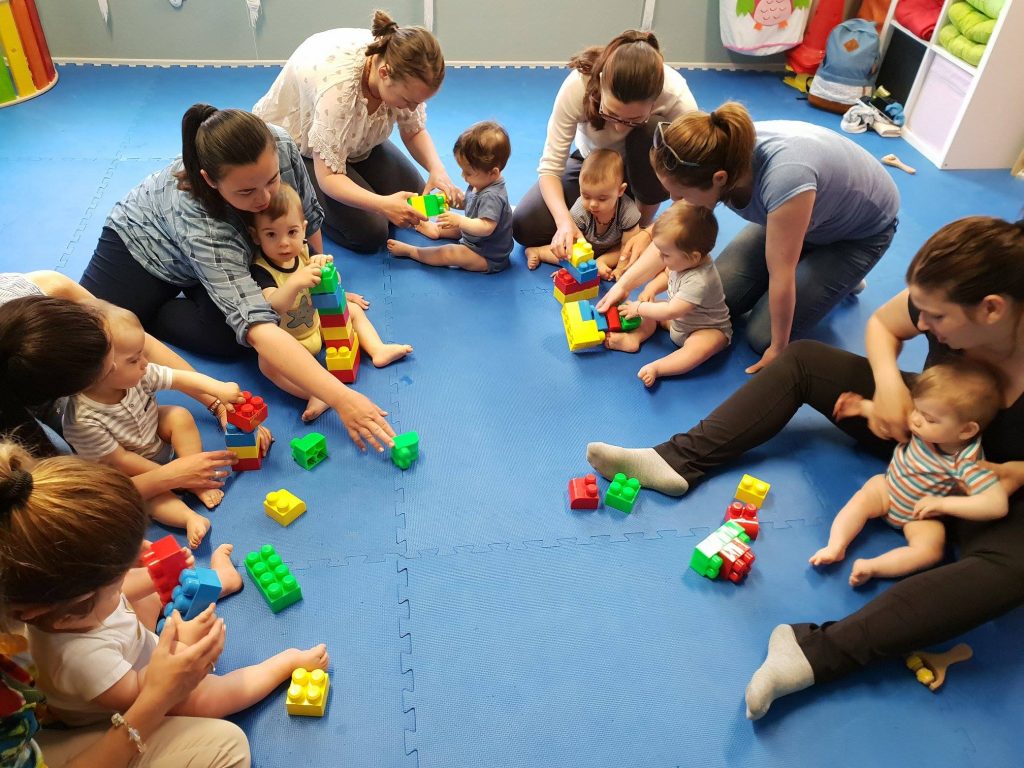
Why the first year is SO important to future learning
Neuro-scientific studies are continuously demonstrating that much of the essential wiring linked to learning is laid down during the earliest years of life. Research into brain development clearly shows a child’s success at school is set in the earliest years of life.
There is an exciting and enormous amount of brain growth that can go on in this earliest year if babies are given the learning opportunities and the opportunity to use their brains. The human brain grows by use and this growth is practically complete by six years of age. This does not mean we cannot learn after this age, it simply means that the quality of learning available to us will depend primarily on the foundations we have acquired in our earliest years.
The biggest difference to the number of neural connections created is made in the first year of life. During the first year, brain cells are busy making millions of connections. The connections peak at about one year and, in a process called ‘pruning’, they are eliminated if they are not used. The connections that babies use regularly are the ones they keep.
As the brain grows, the millions of connections that are made between the message highways – neurons – tell the brain about the body and the environment in which the baby is growing. The number of these connections, how well those messages are transported along the neurons, how strong the connections are and how much information the brain can interpret from the messages will be influenced by several key environmental experiences: movement opportunities, sensory stimulation, emotional security and diet.
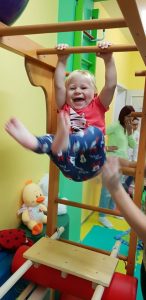 A baby’s brain grows through movement and the correct early movement experiences are easy, natural and fun and any parent can do them with their babies.
Parents are a child’s first, most important and best teacher. Through our KindyROO programs – in class and online, we strive to help parents feel confident in their knowledge about their babies’ brain and body development and provide them with developmentally appropriate and loving activities that can be easily accomplished both at KindyROO and at home.
KindyROO – making the world brighter one baby at a time.
Dr Jane Williams (PhD, BMgt, RN(Paeds)) is the Research and Education General Manager for KindyROO. She is one of Australia’s leading experts on baby and child development.
 Програмата е създадена в Австралия през 1982 г. от Маргарет Сасе, майка на пет деца и специалист по ранно детско развитие. Три от нейните деца и днес се занимават с развитието започнатото от нея.
 В клас Платипус ще ви научим как чрез песни и движения да стимулирате своето бебе. Ще Ви информираме за това, което се случва в различни области на развитието му.
 Сега, когато бебето вече се движи, подът е неговата детска площадка. В клас Уомбат ние ще ви покажем много идеи за музика, ритъм и движение, ще използваме различни техники на масаж и игри.

 На тази възраст малките деца ходят по-стабилно и са с по-добър баланс. Започва етапът на катерене и скачане с два събрани крака. За някои, речта се развива, за други все още акцентът е върху подобряване на двигателните умения. Малките деца започват да разбират описателни думи , като “голям” и “малък” , както и концептуални думи като “над” и “в”. В клас Коала продължава работата с музика, ритъм и танц. Масажната техника се променя в тип “крокодил”.
 Малките кенгура – уолаби са майстори на скачането.
 Децата на тази възраст си мислят, че светът е техен, но все още им предстои да овладеят контрола върху мозъка си така, че лявата и дясната страна на тялото им да изпълняват различни задачи, независимо една от друга.
 Децата в клас Опосум обичат да се катерят, да бягат и галопират, да скачат и се претъркулват, всъщност обичат всяко движение! Те също така стават все по-социални и обичат да играят с другите деца. В KindyROO ние насърчаваме работа в екип.
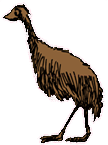 Много специфични са заниманията в клас Ему. Упражнения за развитие на сила в раменния пояс, които спомагат за фина корекция на координацията, концентрацията и двигателните умения, се редуват с работа за фина моторика и развитие на координация око-ръка.